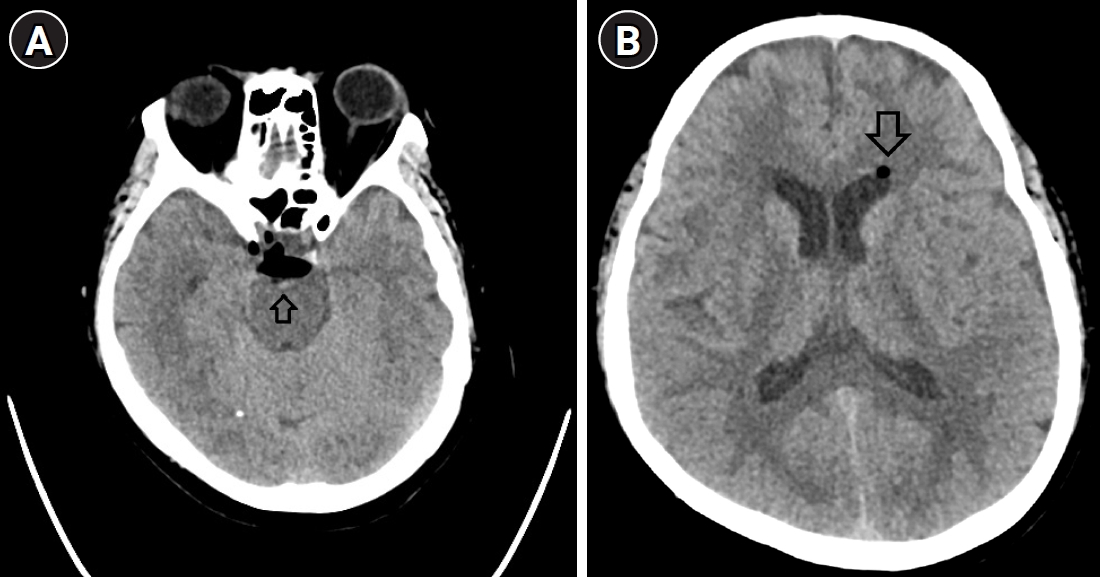
Pneumocephalus is a rare complication of neuraxial procedures and is usually associated with inadvertent dural puncture or the use of air during epidural space identification. Epiduroscopic epidural neuroplasty (EEN) is performed without air injection and permits direct visualization of the epidural space; therefore, pneumocephalus after this procedure is extremely uncommon. A 71-year-old woman with a history of lumbar spine surgery underwent EEN via a caudal approach without sedation. No dural puncture was identified during the procedure. Approximately 12 hours later, she developed a non-orthostatic headache. Brain computed tomography revealed pneumocephalus in the basal cistern and left lateral ventricle. Her symptoms improved with oxygen therapy but worsened 5 days later despite radiologic resolution of the pneumocephalus. Suspected cerebrospinal fluid (CSF) leakage was treated with an epidural blood patch, which resolved her symptoms. Pneumocephalus may occur after EEN without clinically or endoscopically recognized dural injury and may coexist with CSF leakage; an occult microdural defect cannot be excluded as the underlying mechanism. Prompt imaging should be considered in patients who develop early or atypical postprocedural headache.


 , Bo Kyung Kang
 First
First Prev
Prev