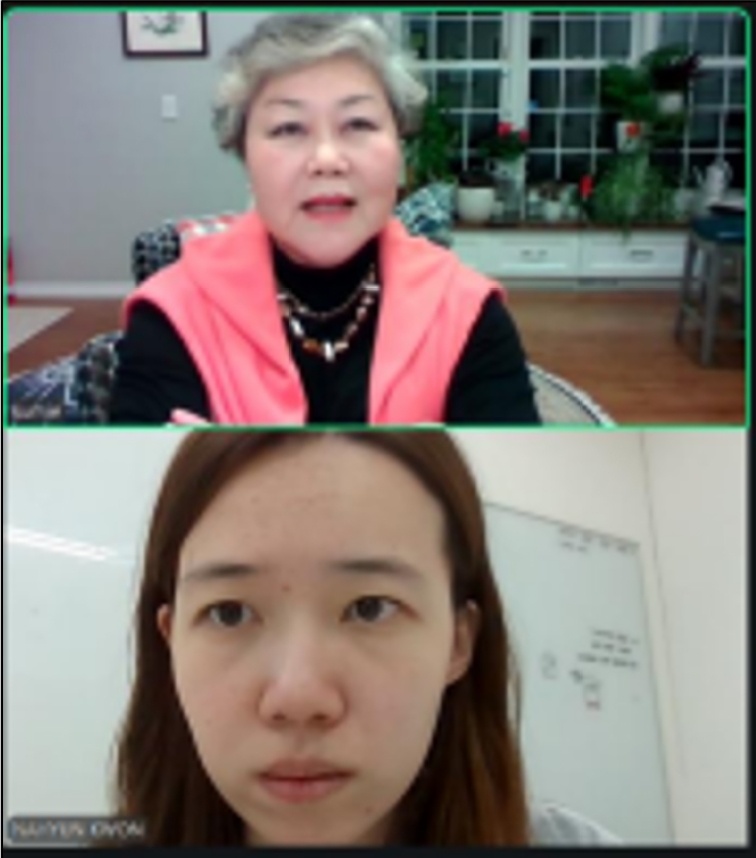
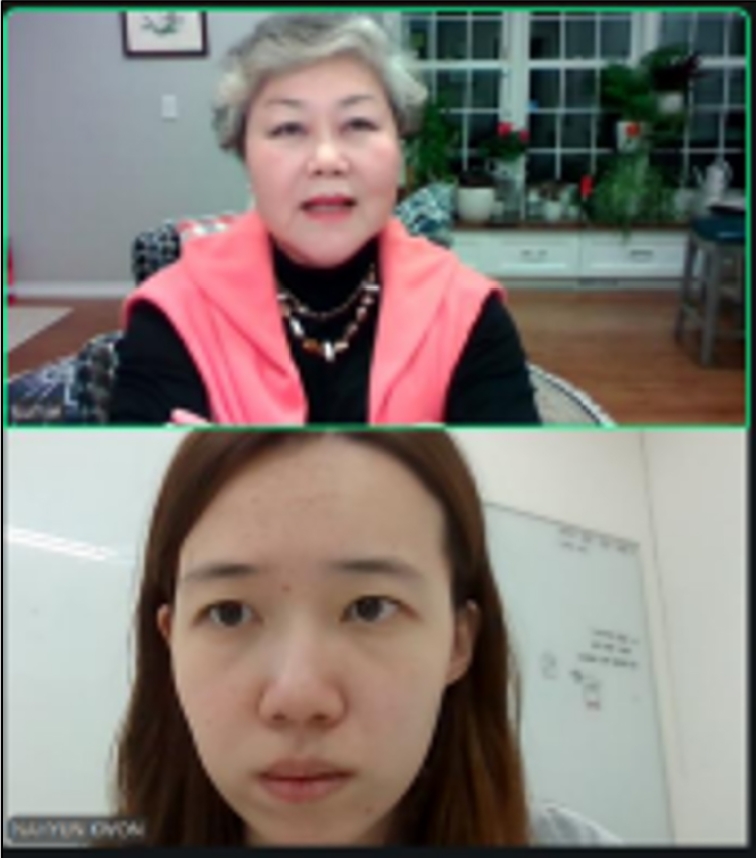
This interview was conducted as part of a project aimed at gaining insight into the international careers of Ewha alumnae and offering current medical students perspectives on pursuing global opportunities. The conversation took place via Zoom with alumna Dr. Kumie Oh, who graduated from Ewha Womans University College of Medicine as a member of the 27th graduating class (
Fig. 1). After completing her anesthesiology residency at Loyola University Medical Center in Chicago, she served for 28 years as a faculty member in the Department of Anesthesiology and also as Director of the Division of Obstetric Anesthesia. Since her medical career in the United States began in 1987 and her faculty appointment in 1991, she has spent several decades contributing to both clinical care and medical education.
While serving as President of the Ewha Medicine Alumnae Association of North America from 2014 to 2018, Dr. Oh strengthened the alumnae network across North America and supported fundraising efforts for Ewha Seoul Hospital in Magok. Beyond her clinical career, she has continued her long-standing interest in botanical art and has participated in various international exhibitions, including those held in conjunction with the 35th and 40th class reunions.
This interview was conducted by student reporter Nahyun Kwon (Class of 2019) and was organized and written by Jiyoon Kim (Class of 2024).
Interview
EMJ: Thank you for joining me today. Could you please start by introducing yourself briefly?
Dr. Oh: Thank you for inviting me, and it is nice to meet you. My name is Kumie Oh, and I am a graduate of Ewha Medicine, 27th graduating class, in 1978. I completed my internship and anesthesiology residency at Ewha Dongdaemun Hospital and then worked as a clinical fellow at Seoul National University Hospital for 1 year. In the United States, I repeated my anesthesiology residency at Loyola University Medical Center in Chicago and later served there as a faculty member for a total of 32 years until my retirement. I am grateful for the opportunity to share my experiences as an anesthesiologist, and I also subspecialized in obstetric anesthesia during my career in the United States.
EMJ: What led you to pursue a medical career in the United States? How was the medical environment different between Korea and the United States at the time, in the mid 80’s?
Dr. Oh: I graduated in 1978, shortly after the Vietnam War ended in 1975. By that time, the pathway for foreign medical graduates to work in the United States through the Educational Commission for Foreign Medical Graduates (ECFMG)-based recruitment had essentially closed. After completing my residency in Korea, I was considering remaining in academia. However, I ultimately chose to join my mother and siblings, who were already living in the United States, and to pursue a new professional challenge abroad.
In the mid-1980s, the medical environment in the United States was quite challenging for foreign medical graduates. During the war, they had been welcomed to fill physician shortages, but by the time I arrived, residency positions for foreign graduates had become extremely competitive. Later, I learned that most Ewha alumnae practicing in the United States had entered the system between the mid-1960s and early 1970s, before opportunities became much more limited.
EMJ: Did you face challenges related to language or cultural differences when working as a physician?
Dr. Oh: Establishing myself in the United States was not easy. I arrived in August 1985 but was unable to begin residency until July 1987. During those 2 years, I applied to more than 130 anesthesiology programs listed in the “Green Book,” a directory of residency programs. Because anesthesiology was highly competitive, even among American graduates, many people advised me to switch specialties. However, I was determined to continue in my original field. During that period, I practiced English consistently and learned most effectively through immersion in clinical work. As we all know, there is no shortcut to learning a foreign language except persistent practice. Because we used English-language medical textbooks for almost every subject in medical school, medical terminology itself was not a major concern.
EMJ: What was your mindset during medical school at Ewha, and how did those experiences shape your career in the United States?
Dr. Oh: I look back on my medical school years with happiness and joy. Although the times were economically challenging for everyone, we were young, hardworking, and surrounded by like-minded, brilliant, and wonderful friends. I have continued these friendships for over 50 years. I also still maintain a close relationship with my mentor, Professor Jong-Nam Kim.
I was active in the mountaineering club, volunteered in rural clinics, and traveled on a limited budget with friends during school breaks. These are memories I treasure deeply. The mid-1970s were politically turbulent, with frequent class cancellations, yet my 5-member study group remained highly motivated. We understood that medicine is a field in which one’s competence directly affects human lives. Many members of that study group later pursued academic careers, and the intellectual atmosphere of that time profoundly influenced me. Even after moving abroad, the enduring friendships formed during those years truly became a source of strength.
EMJ: Could you describe your path into internship and residency in the United States? What challenges did you encounter as an immigrant physician, and how did you overcome them?
Dr. Oh: Although my medical degree from Korea was recognized, I had to repeat both internship and residency, despite already being board-certified in anesthesiology in Korea. In addition to ECFMG certification, the Federal Licensing Examination (FLEX) was required to enter residency. A physician who had gone through the process before me advised, “Study hard, but don’t lose your mind doing it.”
Fortunately, I passed the FLEX on my first attempt and secured a residency position at Loyola University Medical Center. The first year of anesthesiology training is a Clinical Base Year, which involves rotating through internal medicine and other specialties. On my first day, I found myself among 50 internal medicine interns. Only 2 of us were foreign graduates: one Pakistani physician with impeccable British English, and myself, who felt bewildered by everything from the language to the hospital system.
At home, I had 2 young children, aged 1 and 5, and I was physically and emotionally exhausted. However, with my husband’s support and help from family members, I persevered. Once I began my formal anesthesia training, my prior clinical experience in Korea proved to be a tremendous advantage.
EMJ: Was there any particular experience during your early adjustment period that remains unforgettable?
Dr. Oh: Before starting residency, I worked as a temporary extern at a hospital in Evanston. Because the pediatric program there had been discontinued, 2 Indian physicians in similar circumstances and I covered pediatric cases together. I vividly remember accidentally answering a question about a theophylline level in Korean because I was so nervous. At the same time, my prior anesthesia experience served me well. I was often asked to perform newborn intravenous insertions or spinal taps, which helped me earn the nurses’ trust and appreciation. These experiences taught me that despite cultural and linguistic differences, the core of patient care is universal.
EMJ: Did you encounter difficulties as a Korean woman physician in the United States? How did Korean medical training influence your practice in America?
Dr. Oh: Medicine is fundamentally a merit-based profession, so I rarely experienced discrimination based on race or gender. However, systemic differences between the 2 medical systems were quite apparent. In Korea, interns primarily carried out logistical tasks such as transporting X-rays or electrocardiograms. In contrast, interns in the United States independently formulated assessments and treatment plans and presented them during morning rounds. I often arrived at the hospital before dawn to examine my 12 assigned patients and complete their progress notes before the 8 AM rounds. Discharge summaries also took me much longer than they did for American interns. They could often finish in about 10 minutes, whereas on particularly busy days, I spent several hours completing mine. During anesthesia training, the techniques themselves were familiar, but the anesthesia machines and many of the medications were new to me. Nevertheless, my Korean training proved invaluable. On my first day, after intubating a patient with severe burns, the attending physician immediately asked, “How many years of experience do you have?” because my technique appeared advanced. At the same time, patient populations in the United States differed significantly, with higher rates of obesity, trauma, and gunshot injuries. My extensive experience caring for obstetric patients at Ewha Dongdaemun Hospital in Korea was especially helpful later, when I served as Director of Obstetric Anesthesia for more than 2 decades.
American hospitals also placed strong emphasis on collaboration rather than strict hierarchy. Lower-level trainees were expected to express their opinions, a culture that initially felt unfamiliar but ultimately fostered a deeper sense of responsibility.
EMJ: How did you build relationships with other physicians, including Korean American medical professionals?
Dr. Oh: At Loyola, there were very few Korean physicians. I eventually joined the Korean American Medical Association although it dissolved soon afterward. Most of my meaningful connections came through gatherings of the Chicago Ewha Medical Alumni, which were led by devoted senior alumnae such as Dr. Yong-Ok Cho and Dr. Jung-Sik Yoon from the Class of 1959.
EMJ: What role did alumni engagement and the Korean American community play in your life?
Dr. Oh: During my busiest years, it was difficult to participate actively, but as time passed, I became more involved. I served as secretary during the founding of the Ewha Womans University Alumnae Association of North America and later organized the annual conference in Chicago as its president. From 2014 to 2018, I also served as president of the Ewha Medicine North America Alumni Association and helped raise funds for the construction of Ewha Seoul Hospital. My connection to Ewha has always been a source of pride and personal strength.
EMJ: What efforts did you make to maintain excellence as an anesthesiologist?
Dr. Oh: Medicine requires lifelong learning. In the United States, specialists are required to renew board certification every 10 years and to accumulate continuing medical education credits every 3 years for state license renewal. Academic physicians must also remain current through conference participation, ongoing literature review, and teaching responsibilities.
I benefited greatly from activities such as weekly departmental conferences, Journal Club, daily lectures for residents, and joint conferences with obstetrics focused on high-risk obstetric patients. Above all, however, the knowledge gained from caring for the most complex and challenging patients is irreplaceable. Being selected twice by graduating anesthesia residents as “Best Teacher of the Year,” in 1995 and again in 2003, remains one of my proudest professional achievements.
EMJ: How have the qualities expected of physicians changed over time? What core competencies do you believe future physicians must have?
Dr. Oh: In the past, technical skill was considered paramount, but today communication and teamwork are equally essential. When residency graduates apply for positions, department chairs often place great emphasis on an applicant’s ability to collaborate effectively.
Although anesthesiology may appear to be a solitary specialty, it is fundamentally team-based. Furthermore, as technology evolves at an unprecedented pace, physicians must be prepared to adapt. My generation witnessed the transition from handwritten charts to electronic medical records, and future physicians will need to integrate artificial intelligence into nearly all aspects of medical practice.
EMJ: Did any role models or experiences shape your professional values?
Dr. Oh: Before coming to the United States, I read about Dr. Sherwood Hall, a medical missionary who introduced Korea’s first Christmas Seal campaign for tuberculosis prevention. His mother, Rosetta Hall, once donated skin from her own thigh to graft onto a burn patient in Pyongyang. That story taught me the true meaning of compassion, responsibility, and love in patient care.
EMJ: Did you ever regret choosing anesthesiology? What gives you meaning in your career?
Dr. Oh: Initially, I hoped to pursue a career in surgery. However, I am deeply grateful to the late Professor Choon-Hee Lee, former Chair of Anesthesiology at Ewha Dongdaemun Hospital, who encouraged me to consider anesthesiology. In retrospect, it proved to be the perfect choice, especially because obstetric anesthesia became my lifelong passion. The field’s close relationship with surgical innovation and its central mission of alleviating pain align deeply with my values.
The official seal of the American Society of Anesthesiologists, “Vigilance,” captures the essence of our role: safeguarding patient safety under anesthesia. Regional anesthesia techniques, such as spinal and epidural blocks, have significantly reduced maternal mortality. As a member of the Outreach Committee of the Society for Obstetric Anesthesia and Perinatology, I had the opportunity to help introduce epidural anesthesia in Mongolia and Georgia. These experiences reinforced my belief in contributing to a safer and more pain-free world.
EMJ: How did you balance family life with a demanding medical career?
Dr. Oh: Balancing family life with my career was extremely difficult. My children essentially grew up with minimal involvement from their mother because of my demanding workload. I still remember receiving a phone call during a particularly busy Sunday on call, while preparing anesthesia for a lung transplant, from my daughter, even though I had told her not to call me at work. Before I could fully listen, I scolded her. She then burst into tears and said, “Grandma left a pan on the stove, and the house caught fire.” When I returned home the next day, I found significant damage and a flooded basement caused by the fire hoses. Despite these hardships, my children grew up safely and later told me that they were proud of me. Those words are something I will never forget. Their childhood represents the greatest sacrifice I made during my years in the United States.
EMJ: How did you find personal balance outside your professional responsibilities?
Dr. Oh: While taking my son to art lessons, I happened to discover botanical art, which I have now practiced for more than 20 years, including after my retirement. Art became a refuge from clinical stress and provided joy and creative fulfillment. I held exhibitions with classmates during our 35th and 40th reunions and also participated in several international exhibitions. It was especially meaningful to have a solo exhibition in 2024, where I was able to share my work with family and friends. Balancing professional life with artistic expression helped me maintain my emotional well-being.
EMJ: What advice would you give to physicians who feel discouraged or emotionally exhausted?
Dr. Oh: Medicine can be emotionally taxing, particularly when patient outcomes are less favorable than hoped. In those moments, my faith, friends, and family sustained me. Above all, as a believer, my unwavering trust in God became my greatest source of strength.
EMJ: What final message would you like to share with Ewha’s future physicians?
Dr. Oh: Whenever I receive a warm welcome from Ewha, I feel as though I have returned home. I am proud to see Ewha Seoul Hospital establishing its place on the global stage. I hope that today’s students, who are learning in an era with far richer educational resources, study diligently and grow into capable medical professionals who embody the spirit of Ewha. May our school’s traditions and values continue to thrive for generations to come.
Reflection
Through our conversation with Dr. Oh, we were reminded that medicine is not merely a technical profession, but a lifelong commitment rooted in empathy, responsibility, and human understanding. Her career exemplifies the enduring dignity and compassionate leadership of Ewha alumnae, values that remain unchanged across generations.
-
Authors’ contribution
All the work was done by Nahyun Kwon and Jiyoon Kim.
-
Conflict of interest
No potential conflict of interest relevant to this article was reported.
-
Funding
None.
-
Data availability
Not applicable.
-
Acknowledgments
None.
-
Supplementary materials
None.
Fig. 1.On November 4, 2025, an online interview was conducted via Zoom with Dr. Kumie Oh (오구미), a graduate of Ewha Womans University College of Medicine, a member of the 27th graduating class. (A) Dr. Kumie Oh (오구미, Photograph provided by Kwon). (B) Nahyun Kwon, student reporter (Photograph provided by Kwon).