Abstract
-
Purpose
Rectus sheath block (RSB) is a simple abdominal wall block that can be readily applied. This study evaluated the postoperative analgesic efficacy of ultrasound-guided bilateral RSB in robotic single-site gynecologic surgery.
-
Methods
Sixty patients were randomly assigned to the RSB group (n=30) or the control group (n=30). After induction of general anesthesia, patients in the RSB group received ultrasound-guided bilateral RSB with 30 mL of 0.25% ropivacaine. Pain intensity was assessed using a verbal numerical rating scale (VNRS) at 0, 1, 6, 12, 24, and 48 hours postoperatively. Intravenous patient-controlled analgesia was provided to all patients, and fentanyl was administered as rescue analgesia on request.
-
Results
VNRS scores at 0, 1, and 6 hours were significantly lower in the RSB group than in the control group (all P<0.05). Rescue fentanyl use in the post-anesthesia care unit was also significantly lower in the RSB group than in the control group (19.8±21.0 µg vs. 46.3±27.6 µg, P<0.001). Subgroup analysis showed that RSB was associated with lower VNRS scores in patients undergoing ovarian surgery or myomectomy, whereas no significant difference was observed in patients undergoing hysterectomy.
-
Conclusion
Ultrasound-guided bilateral RSB reduced early postoperative pain and rescue analgesic requirements after robotic single-site gynecologic surgery.
-
Keywords: Nerve block; Postoperative pain; Robotic surgical procedures
Introduction
Multimodal analgesia has become a cornerstone of postoperative pain management [
1,
2]. In abdominal surgery, regional blocks such as the transversus abdominis plane (TAP) block, rectus sheath block (RSB), and quadratus lumborum block are effective components of this approach [
3,
4]. Postoperative abdominal pain has somatic and visceral components [
5,
6]. TAP block and RSB primarily target somatic pain, whereas systemic analgesics address broader postoperative pain, including the visceral component [
2,
3]. Combining these modalities can improve the quality of postoperative recovery [
1].
Over the past decade, laparoscopic and robotic surgeries have become increasingly common. Although these minimally invasive approaches can reduce postoperative discomfort, patients may still experience substantial pain [
5,
7]. The sensory blockade produced by RSB is usually confined to the midline; however, our previous study demonstrated clinical benefit even in laparoscopic gynecologic surgeries involving multiple lateral incisions [
8]. Because bilateral RSB-induced somatic analgesia can reduce pain after gynecologic laparoscopy, the present study evaluated the efficacy of bilateral RSB in single-site robotic surgery, which requires only a single periumbilical incision. We hypothesized that ultrasound-guided bilateral RSB would reduce early postoperative pain after robotic single-site gynecologic surgery. The primary objective was to compare the verbal numerical rating scale (VNRS) pain score at 6 hours postoperatively between the RSB and control groups. Secondary objectives were to compare VNRS scores at other time points, rescue analgesic requirements, fentanyl consumption through intravenous patient-controlled analgesia (IV-PCA), and the time to the first rescue analgesic request.
Methods
Study design and patient selection
This prospective, randomized, observer-blinded clinical trial was conducted from May 2015 to January 2017. After approval by the Institutional Review Board of Ewha Womans University Medical Center (EUMC 2015-01-024-002) and registration at ClinicalTrials.gov (NCT02450084), 60 patients provided written informed consent and were enrolled in the study. The inclusion criteria were age 21–60 years and scheduled robotic single-site gynecologic surgery. The exclusion criteria were gynecologic cancer surgery, American Society of Anesthesiologists (ASA) physical status III or higher, a history of abdominal surgery, allergy to local anesthetics, particularly ropivacaine, opioid tolerance, coagulopathy, infection at the needle insertion site, and inability to cooperate with the study protocol.
Randomization and anesthesia protocol
Patients were randomly allocated to the RSB group or the control group (n=30 each) using a computer-generated randomization table. General anesthesia was induced with intravenous glycopyrrolate 0.2 mg, midazolam 3 mg, 1% propofol 2 mg/kg, fentanyl 1 μg/kg, and rocuronium 0.6 mg/kg. After endotracheal intubation, anesthesia was maintained with 2%–3% sevoflurane at an FiO2 of 0.5 to maintain a bispectral index value between 40 and 60. Additional fentanyl boluses of 0.5–1 μg/kg were administered to maintain blood pressure and heart rate within 20% of the baseline values recorded in the operating room.
Procedure for ultrasound-guided bilateral RSB
Ultrasound-guided bilateral RSB was performed by a single experienced anesthesiologist once each patient’s vital signs had stabilized following intubation. Following the protocol established in our previous study [
8], a 38-mm, 6–13-MHz linear transducer (Sonosite M-Turbo; Sonosite) was placed transversely immediately lateral to the umbilicus. A 22G Tuohy needle was inserted using an in-plane technique and advanced from the medial to the lateral side of the transducer. After the needle reached the plane between the rectus muscle and the posterior rectus sheath, 15 mL of 0.25% ropivacaine was injected. Successful placement was confirmed by real-time ultrasound visualization of a hypoechoic local anesthetic pocket. The procedure was then repeated on the contralateral side.
On arrival at the post-anesthesia care unit (PACU), all patients received IV-PCA, which was continued for 48 hours postoperatively. The IV-PCA solution consisted of fentanyl 800 μg and ramosetron hydrochloride 0.3 mg in normal saline, for a total volume of 100 mL. To evaluate and compare patient-demand opioid consumption more accurately, the background continuous infusion was minimized. Because the IV-PCA device required a minimum continuous infusion setting, it was programmed to the lowest possible rate, 0.8 μg/hr (0.1 mL/hr). The device was also set to deliver a 16-μg (2.0-mL) bolus dose with a 15-minute lockout interval. Portable IV-PCA pumps (Accumate 1100; Woo Young Medical Co. Ltd.) recorded the timing and frequency of each patient’s bolus attempts.
In addition to IV-PCA, rescue analgesics were administered when postoperative pain was inadequately controlled. During the PACU period, including the 0- and 1-hour postoperative assessments, intravenous fentanyl was administered as rescue analgesia. After transfer to the general ward, intravenous ketorolac 30 mg was administered as rescue analgesia whenever the patient reported a VNRS score of 4 or higher or requested additional analgesia.
Postoperative pain intensity was assessed at 6 time points. The first 2 assessments were performed in the PACU: immediately on arrival (time 0) and 1 hour later (time 1). Pain was assessed using the VNRS, which ranges from 0, indicating no pain, to 10, indicating the most severe pain imaginable. To maintain objectivity, all assessments were performed by an interviewer blinded to group assignment. After transfer to the ward, the blinded interviewer obtained VNRS scores at 6, 12, 24, and 48 hours postoperatively.
Outcomes
The primary outcome was the between-group difference in VNRS score at 6 hours postoperatively. This time point was selected based on our previous finding that the analgesic duration of RSB is approximately 6 hours [
8]. Secondary outcomes were VNRS scores at 0, 1, 12, 24, and 48 hours; rescue fentanyl dose in the PACU; the proportion of patients requiring rescue analgesics; time to the first rescue analgesic request; the cumulative number of rescue analgesic doses; and the cumulative fentanyl dose infused through IV-PCA up to 48 hours.
The sample size was calculated based on an anticipated 33% reduction in pain at 6 hours. Power analysis, assuming 90% power and a type I error rate of 0.05, indicated that 27 patients were required per group. To allow for a potential 10% dropout rate, 30 patients were enrolled in each group, for a total sample size of 60.
Statistical analysis was performed using SPSS for Windows ver. 18.0 (SPSS Inc.). Continuous variables were analyzed using Student's t-test, and categorical variables were compared using the chi-square test or Fisher’s exact test, as appropriate. A P-value <0.05 was considered statistically significant.
Results
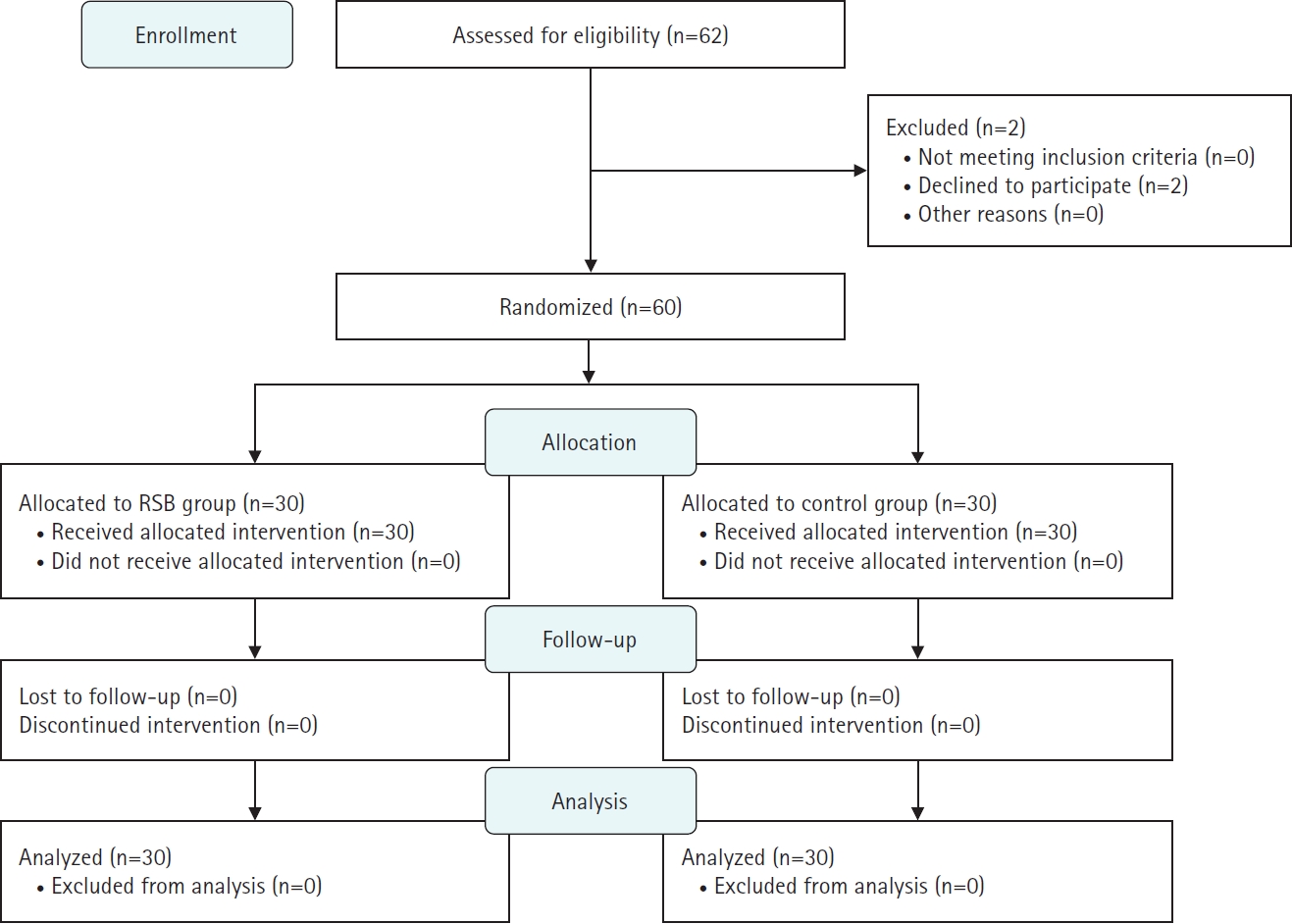
A total of 60 patients were enrolled in the study (
Fig. 1). Demographic characteristics and operative data did not differ significantly between the 2 groups (
Table 1).
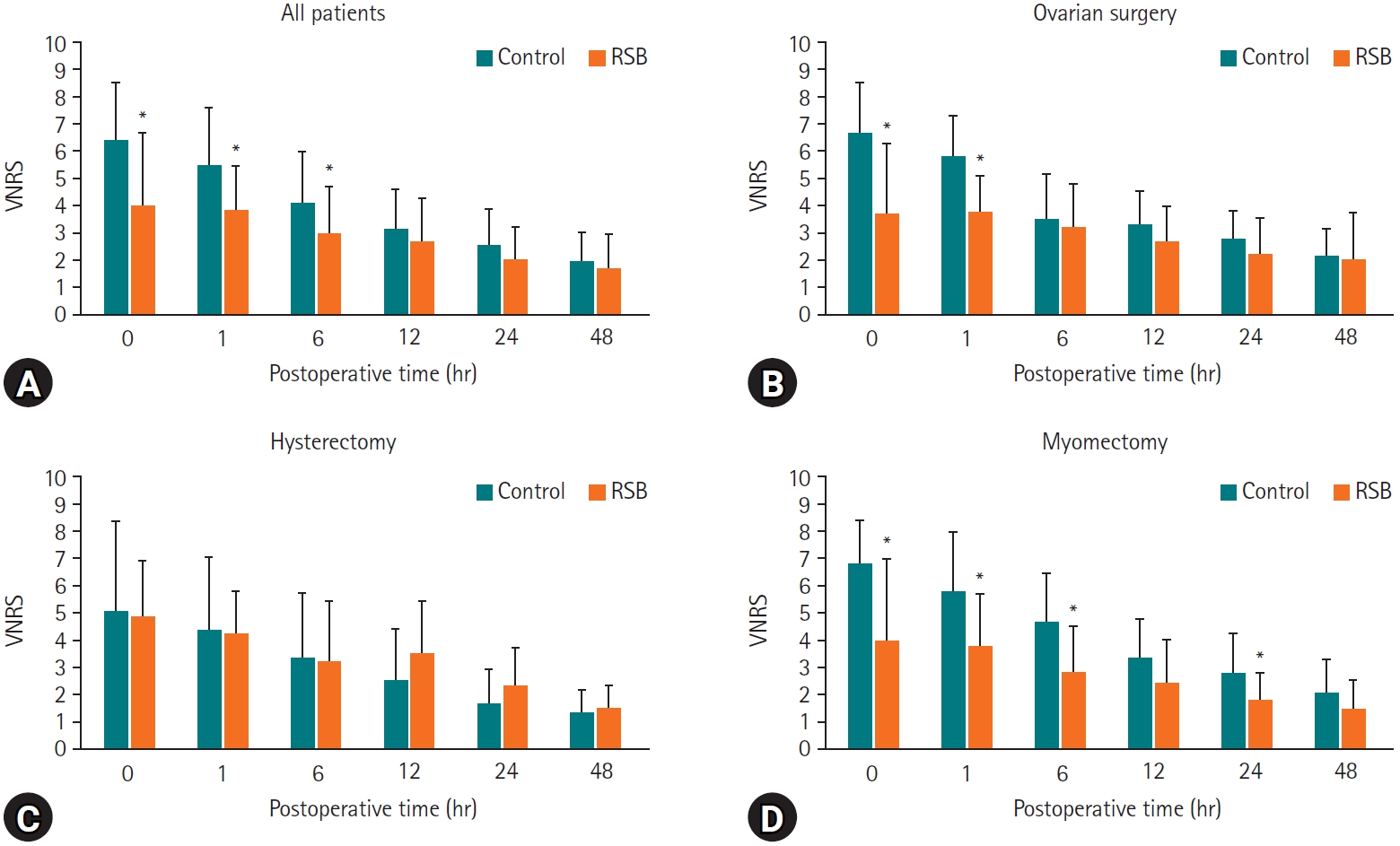
The primary outcome, the VNRS score at 6 hours postoperatively, was significantly lower in the RSB group than in the control group (3.0±1.7 vs. 4.1±1.9, P=0.026). VNRS scores were also significantly lower in the RSB group than in the control group at 0, 1, and 6 hours postoperatively (P<0.001, P=0.001, and P=0.026, respectively) (
Table 2,
Fig. 2). Although intraoperative fentanyl requirements did not differ significantly between the groups, rescue fentanyl use in the PACU was significantly lower in the RSB group (19.8±21.0 µg vs. 46.3±27.6 µg, P<0.001). The proportion of patients requiring rescue analgesics in the PACU was also significantly lower in the RSB group (P=0.009).
The mean time to the first request for rescue analgesia was significantly longer in the RSB group than in the control group (35.4 minutes vs. 12.9 minutes, P=0.002). Although the cumulative number of rescue analgesic doses was significantly lower in the RSB group at all time points, the total fentanyl dose infused through IV-PCA during the 48-hour postoperative period did not differ significantly between the groups (230.7±207.8 µg in the control group vs. 260.8±189.4 µg in the RSB group, P=0.560). In the IV-PCA data (
Table 2), no significant between-group differences were observed in the number of bolus attempts or delivered boluses, except for the number of delivered boluses at 1 hour.
In the subgroup analysis, VNRS scores were significantly lower in the RSB group for up to 1 hour postoperatively among patients undergoing ovarian surgery (n=11 in the RSB group, n=8 in the control group; P=0.013 at 0 hours and P=0.007 at 1 hour). Among patients undergoing myomectomy (n=13 in the RSB group, n=16 in the control group), VNRS scores were significantly lower in the RSB group at 0, 1, 6, and 24 hours postoperatively (P=0.007, P=0.015, P=0.008, and P=0.048, respectively). In contrast, no significant differences in VNRS scores were observed at any time point in the hysterectomy subgroup (n=6 per group) (
Fig. 2).
Discussion
This study evaluated the effect of RSB on postoperative pain and analgesic requirements in patients undergoing single-incision robotic gynecologic surgery. RSB reduced immediate postoperative pain in the PACU, decreased rescue fentanyl requirements, and delayed the first request for rescue analgesia. However, the total fentanyl dose infused through IV-PCA over the 48-hour study period did not differ between groups.
In this study, the RSB group had significantly lower VNRS scores at 0, 1, and 6 hours postoperatively than the control group, as well as lower rescue fentanyl use in the PACU and a longer time to the first rescue analgesic request. Single-site surgery requires a major periumbilical incision in an area innervated primarily by the anterior cutaneous branches of the lower thoracic nerves (T7–T11) [
9,
10]. In an RSB, local anesthetic is injected between the rectus abdominis muscle and the posterior rectus sheath, where it blocks these nerves and reduces somatic pain from the skin and muscles of the abdominal wall [
2,
3,
8,
10]. Previous studies have also reported that RSB is effective for early postoperative pain management, particularly within 6–12 hours after surgery, and can reduce opioid consumption after major abdominal surgery; the early postoperative findings of the present study are consistent with these reports [
7,
11-
14].
Despite the clear analgesic effect observed in the PACU, the total fentanyl dose infused through IV-PCA over 48 hours did not differ significantly between the 2 groups. Two factors may explain this finding. First, the effect of the local anesthetic used for single-injection RSB generally begins to wane after 6–12 hours [
10,
11]. Second, from an anatomical perspective, RSB blocks somatic pain from the abdominal wall but does not block visceral pain originating from intra-abdominal organs. Robotic gynecologic surgery may induce substantial visceral pain, potentially comparable to somatic pain, because of pneumoperitoneum, traction, and resection of internal organs during the procedure. In the early postoperative period, somatic pain at the incision site is likely to predominate, which may make the effect of RSB more apparent. As incisional pain subsides and visceral pain becomes a larger contributor to the overall pain experience, opioid requirements may become similar between groups.
The subgroup analysis illustrates the potential indications and limitations of RSB. Although the RSB group had significantly lower pain scores among patients who underwent myomectomy or ovarian surgery, no significant difference in pain scores was observed at any time point in the hysterectomy subgroup. This difference may reflect variation in the intensity of visceral pain across surgical procedures and differences in neural innervation pathways. Hysterectomy requires extensive manipulation and resection of the uterus and upper vagina, which may produce marked visceral pain transmitted through the lumbar splanchnic nerves (T12–L2) and pelvic splanchnic nerves (S2–S4) [
15]. Major gynecologic surgeries can involve a substantial visceral pain component; therefore, the analgesic effects of abdominal wall blocks alone, such as RSB or TAP block, may be less apparent [
3,
15]. Thus, even if RSB reduces incision-site pain in patients undergoing hysterectomy, the overall VNRS score may not decrease if intense pelvic visceral pain remains insufficiently controlled [
8,
15]. In contrast, myomectomy and ovarian surgery generally involve less deep pelvic traction and no vaginal cuff suturing, which may result in a smaller visceral pain component. Consequently, postoperative pain may remain better controlled for up to 24 hours in these surgical settings, even after the analgesic effect of RSB has waned.
Although pain scores were significantly lower in the RSB group up to 6 hours postoperatively, total fentanyl consumption appeared to converge with that in the control group after this time point (
Table 2). This pattern may reflect rebound pain, in which previously suppressed pain becomes more intense as the effect of a single-injection local anesthetic block resolves [
16]. Rebound pain after peripheral nerve block resolution can cause marked pain and increase the need for systemic analgesics, including opioids. It has been described as a major contributor to increased reliance on systemic analgesia after nerve block resolution. Therefore, although single-injection RSB is effective for reducing immediate postoperative pain, it may not fully prevent a compensatory increase in IV-PCA use after block resolution, which may limit its opioid-sparing effect over a longer postoperative period.
This study has several limitations. First, it was conducted at a single institution and included a relatively small sample; in particular, the hysterectomy subgroup was small, which limited statistical power and generalizability. Second, the 48-hour follow-up period precluded assessment of patient and surgeon satisfaction and longer-term recovery outcomes. Third, because pain was assessed using a single VNRS score, somatic and visceral pain could not be evaluated separately. Fourth, the objective success of RSB could not be confirmed by postoperative sensory testing. Because the block was performed after induction of general anesthesia, sensory blockade could only have been assessed in the PACU. This assessment was deliberately omitted for several reasons: patient responses immediately after surgery may have been inaccurate because of residual anesthetic effects; sensory testing could have compromised patient blinding to group allocation; and, most importantly, applying sensory stimuli, such as pinprick or cold testing, near the surgical site could have caused unnecessary additional pain, particularly in the control group. In addition, neither a clinically meaningful basal opioid infusion nor routine nonopioid analgesics, such as nonsteroidal anti-inflammatory drugs or acetaminophen, were administered as part of a fixed multimodal regimen, to isolate the analgesic effect of RSB on patient-driven opioid demand. Consequently, a substantial proportion of patients, including 17 of 30 in the RSB group, still required rescue analgesics in the PACU. The benefit of RSB might therefore be more clearly demonstrated when RSB is incorporated into a nonopioid-based multimodal analgesic regimen. Future large-scale, multicenter studies should address these limitations and evaluate somatic and visceral pain separately.
In conclusion, RSB was a useful component of multimodal analgesia for robotic single-site gynecologic surgery. It reduced pain and decreased rescue analgesic use during the immediate postoperative PACU period. Future research should evaluate adjuvants that may prolong the duration of RSB or examine RSB in combination with additional analgesic therapies that can address substantial visceral pain.
-
Authors’ contribution
Conceptualization: SC, YJK. Data curation: SM, SC, SY, HWO, EC. Formal analysis: SC, SY, HWO, EC. Investigation: SC, SY. Methodology: SC, YJK. Supervision: YJK. Writing–original draft: SM, SC. Writing–review & editing: SC, YJK, SY, JWL, HWO, EC.
-
Conflict of interest
No potential conflict of interest relevant to this article was reported.
-
Funding
None.
-
Data availability
The datasets generated and/or analyzed during the current study are not publicly available, but are available from the corresponding author on reasonable request.
-
Acknowledgments
None.
-
Supplementary materials
None.
Fig. 1.Consolidated Standards of Reporting Trials (CONSORT) flow diagram.
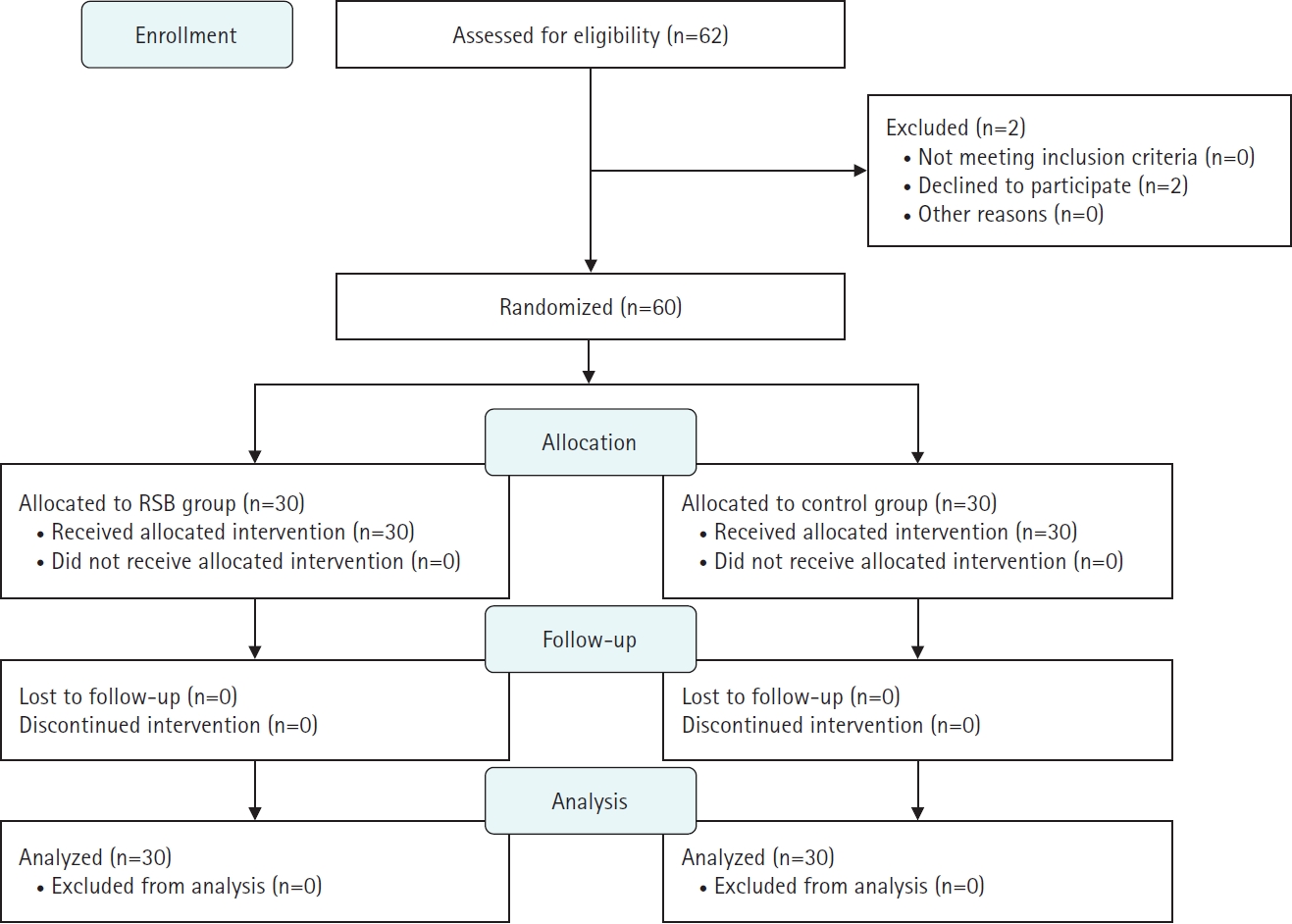
Fig. 2.(A–D) Postoperative pain intensity measured using a verbal numerical rating scale (VNRS) over time. Pain scores were assessed at 0, 1, 6, 12, 24, and 48 hours postoperatively in the rectus sheath block (RSB) and control groups. VNRS scores are presented for the overall study population and for subgroups defined by surgery type: ovarian surgery, myomectomy, and hysterectomy. *P<0.05.
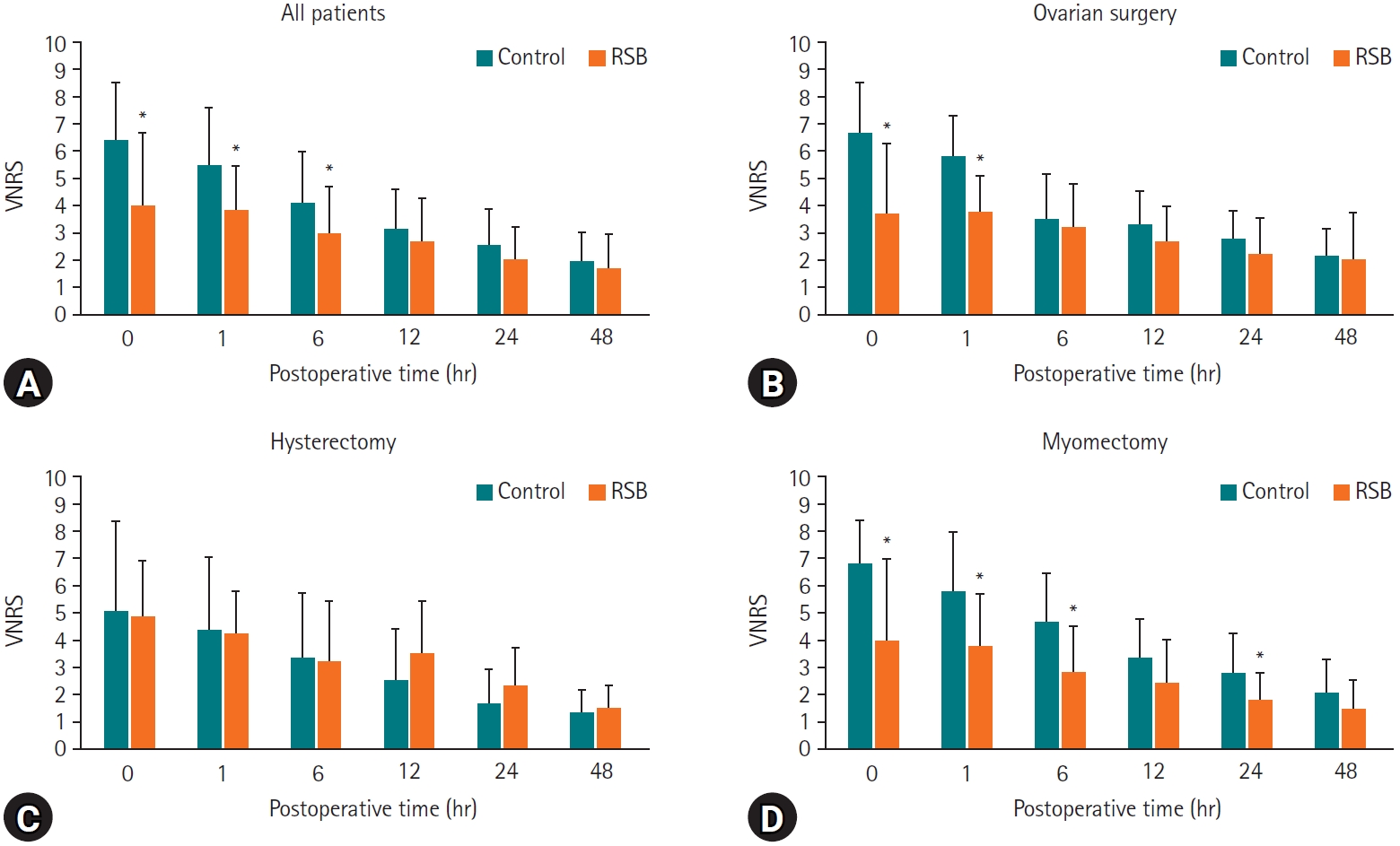
Table 1.Demographic and operation-related data
|
Characteristic |
Control group (n=30) |
RSB group (n=30) |
P-value |
|
Age (yr) |
35.4±9.8 |
34.3±8.2 |
0.629 |
|
ASA PS |
|
|
0.573 |
|
I |
20 |
22 |
|
|
II |
10 |
8 |
|
|
Body mass index (kg/m2) |
21.4±2.8 |
22.1±4.5 |
0.432 |
|
Operation type |
|
|
0.676 |
|
Ovarian surgery |
8 |
11 |
|
|
Hysterectomy |
6 |
6 |
|
|
Myomectomy |
16 |
13 |
|
|
Adhesiolysis |
|
|
0.592 |
|
Yes |
12 |
10 |
|
|
No |
18 |
20 |
|
|
Operation time (min) |
117.0±48.5 |
123.2±54.0 |
0.642 |
|
Anesthesia time (min) |
159.2±49.1 |
164.1±52.6 |
0.709 |
|
Intraoperative fentanyl dose (µg) |
146.0±39.4 |
158.6±40.6 |
0.231 |
|
Rescue analgesics in PACU |
|
|
0.009 |
|
Yes |
27 |
17 |
|
|
No |
3 |
13 |
|
|
Rescue fentanyl dose in the PACU (µg) |
46.3±27.6 |
19.8±21.0 |
<0.001 |
|
Time to the first rescue analgesic request (min) |
12.9±17.9 |
35.4±29.0 |
0.002 |
Table 2.Intravenous patient-controlled analgesia and rescue analgesic data
|
Variable |
Control (n=30) |
RSB (n=30) |
P-value |
|
VNRS |
|
|
|
|
0 hr |
6.4±2.1 |
4.0±2.7 |
<0.001 |
|
1 hr |
5.5±2.1 |
3.8±1.6 |
0.001 |
|
6 hr |
4.1±1.9 |
3.0±1.7 |
0.026 |
|
12 hr |
3.1±1.5 |
2.7±1.6 |
0.270 |
|
24 hr |
2.5±1.3 |
2.0±1.2 |
0.130 |
|
48 hr |
1.9±1.1 |
1.7±1.3 |
0.390 |
|
Total dose of fentanyl infused via IV-PCA (µg) |
|
|
|
|
1 hr |
24.8±16.7 |
17.3±15.4 |
0.077 |
|
6 hr |
84.3±59.5 |
84.3±74.4 |
1.000 |
|
12 hr |
123.7±106.6 |
120.5±115.3 |
0.912 |
|
24 hr |
171.7±167.0 |
182.4±176.0 |
0.811 |
|
48 hr |
230.7±207.8 |
260.8±189.4 |
0.560 |
|
Cumulative no. of delivered IV-PCA boluses |
|
|
|
|
1 hr |
1.5±1.0 |
1.0±0.9 |
0.042 |
|
6 hr |
4.7±3.5 |
5.2±4.8 |
0.669 |
|
12 hr |
6.5±5.8 |
6.7±6.7 |
0.886 |
|
24 hr |
8.3±8.3 |
11.9±12.5 |
0.190 |
|
48 hr |
10.8±10.9 |
15.3±13.4 |
0.152 |
|
Cumulative no. of IV-PCA bolus attempts |
|
|
|
|
1 hr |
4.8±13.7 |
2.2±3.7 |
0.326 |
|
6 hr |
11.0±16.5 |
15.1±41.6 |
0.615 |
|
12 hr |
13.1±19.4 |
19.2±45.4 |
0.499 |
|
24 hr |
15.7±23.5 |
24.8±49.2 |
0.368 |
|
48 hr |
18.8±26.7 |
28.4±48.9 |
0.349 |
|
No. of rescue analgesic doses |
|
|
|
|
0 hr |
0.7±0.5 |
0.0±0.2 |
<0.001 |
|
1 hr |
1.7±0.9 |
0.8±0.8 |
<0.001 |
|
6 hr |
2.4±1.1 |
1.5±1.0 |
0.001 |
|
12 hr |
3.0±1.4 |
1.8±1.3 |
0.001 |
|
24 hr |
3.6±1.8 |
2.0±1.5 |
<0.001 |
|
48 hr |
3.8±2.1 |
2.1±1.5 |
0.001 |
References
- 1. Cheng C, Wang J, Cao Y, Gu E, Liu X. Effect of rectus sheath block on postoperative quality of recovery after transabdominal midline gynecological surgery: a randomized controlled trial. J Pain Res 2024;17:2155-2163. https://doi.org/10.2147/JPR.S460367
- 2. Yoo SH, Beak MH, Lee DH, Kim WJ. Effect of perineural dexamethasone as an adjuvant to ropivacaine in rectus sheath block for radical cystectomy: a randomized controlled trial. J Clin Med 2025;14:5186. https://doi.org/10.3390/jcm14155186
- 3. Chin KJ, McDonnell JG, Carvalho B, Sharkey A, Pawa A, Gadsden J. Essentials of our current understanding: abdominal wall blocks. Reg Anesth Pain Med 2017;42:133-183. https://doi.org/10.1097/AAP.0000000000000545
- 4. Smith BE, Suchak M, Siggins D, Challands J. Rectus sheath block for diagnostic laparoscopy. Anaesthesia 1988;43:947-948. https://doi.org/10.1111/j.1365-2044.1988.tb05658.x
- 5. Fu H, Fu Y, Xu X, Gao Y. Ultrasound-guided rectus sheath block combined with butorphanol for single-incision laparoscopic cholecystectomy: what is the optimal dose of ropivacaine? J Pain Res 2020;13:2609-2615. https://doi.org/10.2147/JPR.S265418
- 6. Topçu HO, Cavkaytar S, Kokanalı K, Guzel AI, Islimye M, Doganay M. A prospective randomized trial of postoperative pain following different insufflation pressures during gynecologic laparoscopy. Eur J Obstet Gynecol Reprod Biol 2014;182:81-85. https://doi.org/10.1016/j.ejogrb.2014.09.003
- 7. Shim JW, Jung S, Moon HW, Lee JY, Park J, Lee HM, Kim YS, Hong SH, Chae MS. Rectus sheath block for acute pain management after robot-assisted prostatectomy. Asian J Surg 2022;45:1843-1848. https://doi.org/10.1016/j.asjsur.2021.10.035
- 8. Cho S, Kim YJ, Jeong K, Moon HS. Ultrasound-guided bilateral rectus sheath block reduces early postoperative pain after laparoscopic gynecologic surgery: a randomized study. J Anesth 2018;32:189-197. https://doi.org/10.1007/s00540-018-2457-0
- 9. Urmale Kusse A, Legesse M, Assefa A, Tila M, Sintayhu A, Mequanint A, Markos M, Kussia W, Dendir G, Gebremedhin TD, Sidamo T, Obsa MS. Postoperative analgesic effectiveness of ultrasound-guided bilateral erector spinae plane block vs. rectus sheath block for midline abdominal surgery in a low- and middle-income country: a randomised controlled trial. Anaesthesia 2024;79:1292-1299. https://doi.org/10.1111/anae.16421
- 10. Abbawy M, Okoh D, Binuraj A, Holden F, Fox B, Sachdeva R, Pooni J, Singh M, Allen T, Ganguly S, Gao-Smith F, Veenith T. The role of the rectus sheath block in modern perioperative care for midline laparotomy: a review of the evidence. Front Anesthesiol 2026;5:fanes.2026. https://doi.org/10.3389/fanes.2026.1725241
- 11. Hamid HK, Ahmed AY, Alhamo MA, Davis GN. Efficacy and safety profile of rectus sheath block in adult laparoscopic surgery: a meta-analysis. J Surg Res 2021;261:10-17. https://doi.org/10.1016/j.jss.2020.12.003
- 12. Azemati S, Khosravi MB. An assessment of the value of rectus sheath block for postlaparoscopic pain in gynecologic surgery. J Minim Invasive Gynecol 2005;12:12-15. https://doi.org/10.1016/j.jmig.2004.12.013
- 13. Yoon JP, Kim HY, Jung J, Lee J, Park S, Byeon GJ. Analgesic effect of ultrasound-guided transversus abdominis plane block with or without rectus sheath block in laparoscopic cholecystectomy: a randomized, controlled trial. BMC Anesthesiol 2024;24:203. https://doi.org/10.1186/s12871-024-02590-x
- 14. Hamill JK, Liley A, Hill AG. Rectus sheath block for laparoscopic appendicectomy: a randomized clinical trial. ANZ J Surg 2015;85:951-956. https://doi.org/10.1111/ans.12950
- 15. Kim D, Bang S, Chung J, Shin HJ, Lee E. Rectus sheath block provides superior analgesia over quadratus lumborum block in single-port total laparoscopic hysterectomy: a prospective, randomized trial. Korean J Anesthesiol 2025 Aug 22 [Epub].https://doi.org/10.4097/kja.25174
- 16. Lavand'homme P. Rebound pain after regional anesthesia in the ambulatory patient. Curr Opin Anaesthesiol 2018;31:679-684. https://doi.org/10.1097/ACO.0000000000000651


 , Sooyoung Cho1,*